
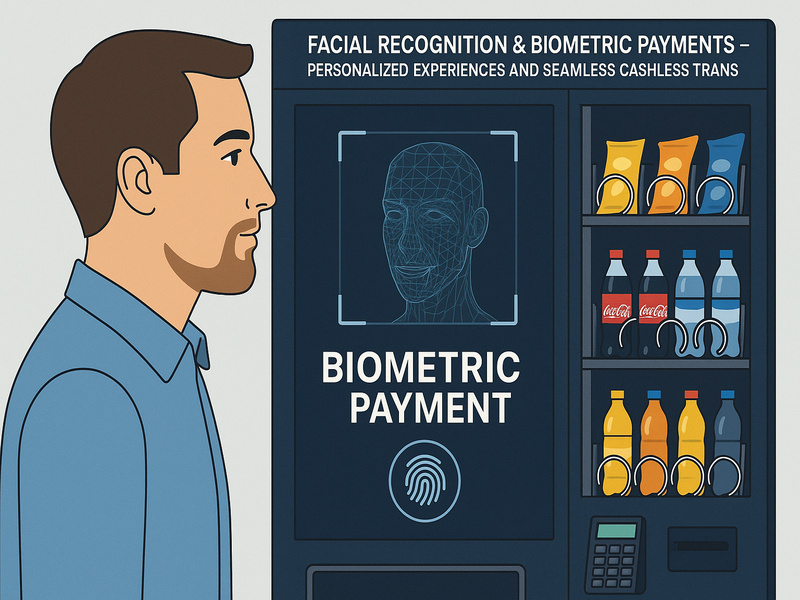
The vending machine of tomorrow won’t just dispense snacks or drinks—it will recognize your face, understand your preferences, process payments without a wallet, and offer tailored experiences. With advancements in AI, facial recognition, and biometric payment systems, the humble vending machine is evolving into a fully autonomous agentic machine—an intelligent device capable of decision-making, personalization, and seamless interaction.
AI-Powered Agentic Vending Machines: Beyond Automation
Traditional vending machines operate on a rigid set of instructions. Insert coins. Press a button. Get a snack. But agentic machines—powered by AI—are autonomous entities that can observe, learn, adapt, and act on your behalf.
These next-gen vending machines are equipped with:
- Computer Vision for identifying customers through facial features.
- Natural Language Understanding (NLU) for voice-based interactions.
- Machine Learning Models that learn user behavior, preferences, and environmental context (e.g. hot day = recommend cold drinks).
- Real-Time Analytics to track inventory, optimize stocking, and reduce wastage.
Imagine walking up to a vending machine that greets you by name, suggests your usual drink order, or promotes a healthy snack alternative based on your health goals. That’s the promise of AI-powered agentic systems.
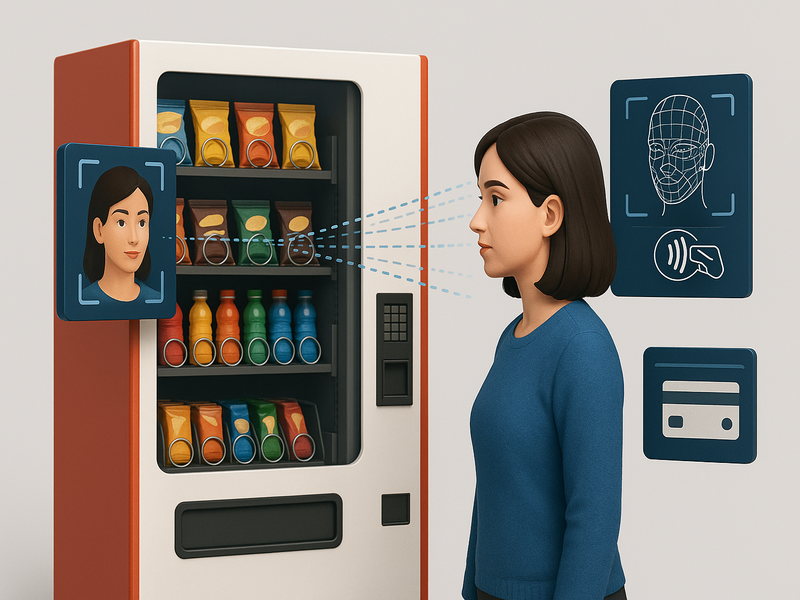
Facial Recognition: Personalized & Contactless Interaction
Facial recognition is becoming a core part of the vending experience. When integrated responsibly—with privacy and consent in mind—it unlocks a new level of personalization and convenience:
Benefits:
- Instant Identity Verification: Skip login or cards; the machine recognizes your face and pulls up your profile.
- Custom Recommendations: Based on age, purchase history, or even mood (detected via micro-expressions).
- Frictionless Loyalty Programs: Earn points and unlock promotions just by being recognized—no cards or QR codes needed.
Example Use Case:
At a university campus, a student walks up to a vending machine. The system recognizes her face, knows she usually buys energy drinks before afternoon classes, and suggests a new flavor. She accepts with a smile—payment and dispensing are automatic.
Biometric Payments: The Rise of Wallet-Free Transactions
Biometric payments (face, fingerprint, iris, or even palm recognition) are emerging as a secure and seamless way to pay. In vending machines, this translates to:
- Faster Checkout: No need to pull out a card or phone.
- Improved Security: Biometric identifiers are harder to spoof than PINs or passwords.
- Better Hygiene: Especially post-pandemic, contactless is king.
These systems often link with mobile wallets or internal machine accounts. Combined with AI, they support dynamic pricing (discounts for loyal users), instant refunds, and even peer-to-peer credit transfers.
Vending Machines as Autonomous Retail Agents
What happens when you mix AI, facial recognition, and biometric payment into a single unit? You get an autonomous retail agent. These intelligent machines:
- Adapt Inventory based on neighborhood trends, sales data, and user feedback.
- Negotiate Offers in real-time—imagine getting a 10% discount if you’re a repeat customer.
- Predict Demand using environmental and behavioral signals.
- Self-Maintain by detecting malfunctions and requesting restocking or repairs without human intervention.
This transformation aligns vending machines more closely with agentic AI systems—systems that act in the world, gather data, and pursue goals on their own.
Privacy & Ethical Considerations
While the technology is exciting, ethical deployment is key. Facial recognition and biometrics raise concerns about:
- Consent: Users must opt in knowingly.
- Data Security: Biometric data must be encrypted and anonymized.
- Bias and Fairness: Systems must be trained on diverse datasets to avoid demographic biases.
Companies adopting these technologies must comply with local data protection laws (like GDPR) and prioritize user trust.
Real-World Rollouts and the Road Ahead
Major retailers and innovators are already deploying AI-powered vending systems in:
- Airports and Train Stations: Offering premium, personalized snack options to frequent travelers.
- Fitness Centers: Recommending protein bars post-workout using biometric feedback.
- Offices and Campuses: Allowing employees/students to “grab and go” using face-based payment.
As edge AI chips become cheaper and connectivity improves (5G, Wi-Fi 6), the adoption of agentic vending machines will accelerate globally.
Conclusion: A Personalized, Frictionless Retail Future
Facial recognition and biometric payment systems are not just upgrades—they are foundational to a new era of vending machines that are intelligent, personalized, and self-sufficient. These machines blur the lines between retail, robotics, and AI, offering seamless experiences that delight users while optimizing operations for providers.
As consumers demand more personalization and speed, AI-powered agentic vending machines will lead the way—face-first and wallet-free.
Leave a Reply